


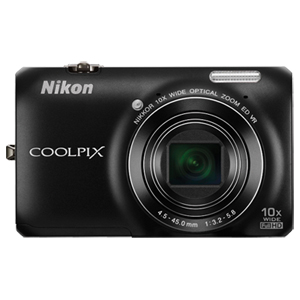
16 megapixel camera best buy image

Jessie
I'm not so smart when it comes to cameras so if this is a really stupid question please dont judge me. I see a digital camera for about up to 300 dollars and it has 14-16 megapixels but then theres dslr's that cost much much more and they are the same megapixels. I don't quite understand? Can you take just as well pictures as a dslr?
Answer
Nah, not a dumb question. The big difference is a regular old digital camera can be used for anything, while a DSLR is typically only used for really high end photography or professional photography work. Here's why.
An SLR camera is typically a 35mm film camera where SLR stands for Single Lens Reflex, which means that the camera use a mirror and a prism system to reflect the light in a way that the photographer can look directly through the lens to see exactly what is being captured in frame. It's when you look through the little viewfinder on the back of the camera as opposed to most digital cameras which have LCD screens on the back showing what the camera is taking a picture of.
So, a DSLR is a digital version of an SLR camera, but the differences don't really stop with just the direct lens view through viewfinder vs. LCD screen. SLRs and DSLRs are camera systems, really, as opposed to a one piece compact digital or even 35mm film camera. Typically DSLRs and SLRs are sold as just the bodies, and you buy the lenses separately as there is a vast array of options for lens types and mm sizes, telephoto with massive zooms, pretty standard 35-70mm normal use lenses, macro lenses for really close up shots, etc. SLR camera bodies have all sorts of adjustments and features not present on normal cheaper cameras, where you have to adjust the film speed, the shutter speed, f-stop with the aperture, choose your field of view in mm, manual focus, you can add a flash to the top of the camera, SLRs typically always have light meters built in to the viewfinders so you know if the exposure is correct, you can attach remote triggers for very slow shutter speeds when the camera is mounted on a tripod so you could take a photo say, of the night sky over 8 hours as the stars circle around the sky above the camera.
So a DSLR is a digital version of an SLR camera, and as such, they are very expensive. Some photographers like real film for certain qualities you can't get with a digital, and others like the immediate availability of viewing and using your shots with a digital. If you're planning on really getting into photography, you'd have to decide if you wanted a traditional SLR body or a Digital SLR body, as the prices are quite different (the digital being much more expensive). Unless you're going to become an avid amateur photographer, a nice digital with a high MP rating would be fine for you, a DSLR is too fancy for what you're going to do.
Personally, I've been an amateur wildlife and outdoor still life and scenery photographer for about 12 years, and I have a really great 35mm SLR body with a multitude of lenses to suit my needs, and I love it, but then I also have a nice little compact digital 12 megapixel camera for just taking photos of friends and family and at gatherings and stuff. Just for the every day normal stuff, and it's just great for that, instead of having to lug out the big camera and make all the adjustments and shoot a whole roll and then develop it.
DSLRs give you much, MUCH more control over image manipulation while taking the shot, but regular digitals are offering more and more features like different settings for macro, normal, and infinite focuses, red eye reduction, auto, on, or off flash settings, and stuff like that, so you can still have some control over the photo you're shooting, but just not nearly as much as with an SLR. But like I said, for the average photo taker, you don't need all the fancy stuff that comes with the SLRs. It's a costly investment, and you have to teach yourself how to take advantage and how to use all the features and settings of the SLRs in order to use them, and justify the investment.
Just for reference, a DSLR looks pretty much the same as a film based SLR. They are the cameras you see professional photographers using that have a rectangular body with the lens mounted in the middle of the front, protruding out a few inches or more depending on the zoom level. Regular digital cameras are usually just a square or rectangular shape with a small lens that pops out the front when you turn the camera on. You probably have seen the difference if you've been looking online or in a store at cameras though.
I don't think you need the advantages of a DSLR based on your knowledge and experience with photography, unless you want to turn it into a new hobby. Otherwise, a nice digital camera with a nice high megapixel rating will be just great for you and your photos! Hope I helped!
How do you take professional photos with a cheap camera?
Whatever
I have a Sony WX60 with 16 megapixels and basically it's just a small digital camera that cost me 159 euros. Anyway, is there a way to "cheat" and make your photos look professional? Especially with portrait landscape and portrait photos? If you can refer me to a GOOD tutorial that'd be great.
I have Photoshop by the way.
Typo: with landscape and portrait photos*
Answer
What makes good photos good is not the camera used to take them, but what you point it at. "Professional" photographers take time to compose the image properly alter the lighting if necessary using flashes or modifiers. Sure, an expensive camera helps, but clicking the button is just one step in a long process.
Your camera should be fine to get you started. There's no shortcut to amazing photos - I recommend you buy a could of photography books and study the advice. Amazon has loads of inexpensive digital photography guides. Go to art galleries and look at other photographers' work - do a mini-critique in your head - do you like it? Why?
Once you've worked out how to set up interesting photos in your head, the standard of your photography will naturally improve as you master the skills needed to get the most out of your camera.
Powered by Yahoo! Answers

